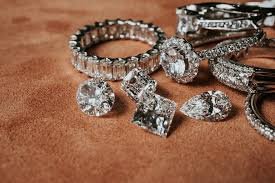
Wholesale manufacturers may satisfy both demands with hybrid manufacturing. They use machines to carry out processes like casting and structural shaping, but the delicate work of stone setting, polishing, engraving and finishing is done by hand by expert craftsmen.
It does so without compromising on the beauty and uniqueness of handmade jewelry while being scalable. Hybrid Wholesale Jewelry Manufacturers USA significantly saves production costs and lead times against all hand-done operations.
Traceability and Transparency Are Becoming a Must
Manufacturers are designing jewelry that resonates with strong design, layered appeal and impactful visual features, and it’s working in digital marketing efforts.
Jewelry brands that are online-centric need to provide photography-friendly finishes, stackable collections and trend-driven designs.
Manufacturers that grasp the changes in internet shopping are becoming a useful partner to today’s jewelry manufacturers. It is a well thought out system to assure quality, consistency, efficiency and customer happiness.
Wholesale Jewelry Manufacturers’ Role
Wholesale jewelry producers are the backbone of the jewelry supply chain. They are primarily responsible for manufacturing jewelry goods in bulk for stores, internet companies, boutiques and wholesalers.
Manufacturers may use gold, silver, platinum, stainless steel, brass, diamonds, gemstones as well as pearls and synthetic stones. They use sophisticated machines and excellent workmanship to make completed items, ready for the shops.
Many modern wholesale manufacturers in the USA provide end-to-end manufacturing services. These services may include product design, prototyping, casting, stone setting, polishing, quality control, packing and shipment. Some manufacturers also provide private labeling and bespoke manufacturing for jewelry firms looking to create distinct lines.
Manufacturers are important partners for many firms. They’re used by retailers not just for inventory but for product development, trend responsiveness, and supply chain efficiency. With CAD technology, designers can produce precise three-dimensional representations that indicate measurements, positioning of gemstones, thickness of the metal and structural elements before actual manufacturing starts.
Prototype and Sampling
Manufacturers then build prototypes or samples after the design is complete. Prototypes provide designers and merchants the opportunity to physically check the product before mass manufacturing starts.
In many industries, 3D printing is used to make prototypes. Digital CAD files are used to create wax or resin models, which are then examined for size, comfort, balance and appearance.
The importance of prototyping lies in the fact that it assists in identifying design defects early in the process. Changes may be made to the gemstone placements, clasp mechanisms or metal thickness before committing to full manufacturing.
Retailers usually ask for sample items so that they can see the workmanship and know that the goods meet their branding requirements. Custom jewelry companies may need many rounds of prototyping before they approve the final manufacture.
Metal Forming and Casting
Casting is one of the most important phases in the manufacture of jewelry. In this method, molten metal is poured into molds to create the fundamental form of jewelry items.
The lost-wax casting technology is used by many firms to recreate complex patterns properly. Pieces are examined for structural faults.
Depending on the intricacy of the design, metal shaping may additionally include operations such as stamping, laser cutting, engraving or bending.
Setting Stones and Fitting
After the assembling, the jewelry goes to the finishing step. The procedure improves the look and gets things ready to be sold.
Polish takes away scratches, smooths surfaces and adds gloss. Manufacturers utilize polish wheels, ultrasonic cleaners and specific additives to produce the required finish.
Most jewelry is also plated or treated with other finishes to enhance the look and wear ability ( gold plate , rhodium plate , anti tarnish treatment ).
The finishing procedures differ with the style of the product. All products must satisfy stringent requirements before leaving the facility.
Manufacturers carry out checks across the whole manufacturing process from casting, stone setting, polishing up to packing. These inspections may help avoid expensive returns by catching issues early. Low quality items may lead to returns, unfavorable reviews and long term company losses.
Packaging and Branding
Packaging is a crucial part of the jewelry supply chain since it affects the consumer impression and brand identification. Packagers are typically used by retailers and private-label firms on a wholesale basis.
Good inventory management is also a must for wholesale companies since merchants rely on having products available on time. Many US wholesale jewelry producers cooperate with shipping carriers, freight firms and logistics providers to facilitate delivery.
Advantages of manufacturing in the US include communication and quickness of delivery. Retailers get jewelry goods from wholesale producers via catalogs, trade exhibitions, web sites, or direct collaborations. Online jewelry firms also depend on wholesale manufacturers for private labeling and bespoke manufacturing services.
When retailers are choosing who to collaborate with, they look at manufacturers’ quality, cost, timeliness, communication and dependability. Ongoing competition from foreign manufacturing is impacting price tactics and operations choices inside the U.S. market.
Jewelry Manufacturing in the Age of Technology
Technology is transforming the way wholesale jewelry producers do business in the United States. Efficiency and scale in manufacturing are being enhanced by automation, digital modelling and modern technology. Manufacturers will usually offer frequent updates throughout the manufacturing process to keep things transparent.
This is particularly the case for bespoke jewelry manufacturers that are creating distinct collections. Material selection, technical modifications, and design enhancements may be assisted by manufacturers throughout development.
Good ties between manufacturers and merchants means easier operations and long term success of the firm. Retailers acquire things at a wholesale price, allowing them to sell at a higher retail price and make a profit. Smaller batch manufacturing is becoming increasingly frequent in 2026, although most businesses have minimum order sizes. The jewelry business is still growing fast with the increasing customer demands for fine jewelry, trendy accessories, personalized designs and luxury items in all the worldwide marketplaces. For jewelry shops, online companies, startups and distributors, picking the correct production partner is one of the most crucial business choices. Of all the sourcing choices accessible today, partnering with wholesale jewelry manufacturers in the USA provides a host of important benefits.
He says that domestically, jewelry manufacture is becoming more appealing, as companies are now focused on quality, dependability, quicker delivery, transparency, greater communication. Many jewelry businesses are turning to local production partnerships to optimize operational efficiency and have more control over their goods and supply chains, in 2026.
Wholesale jewelry manufacturers in the USA have a lot more to offer than product manufacturing. They help companies grow with bespoke services, quality assurance, technological innovation, speedier delivery and long-term cooperation prospects. These benefits allow firms to compete more successfully in a market where consumer expectations continue to grow.
Summary
Wholesale Jewelry Manufacturers USA also are investing in inventory management software, virtual showrooms and digital communication capabilities to serve online merchants and worldwide distribution.