
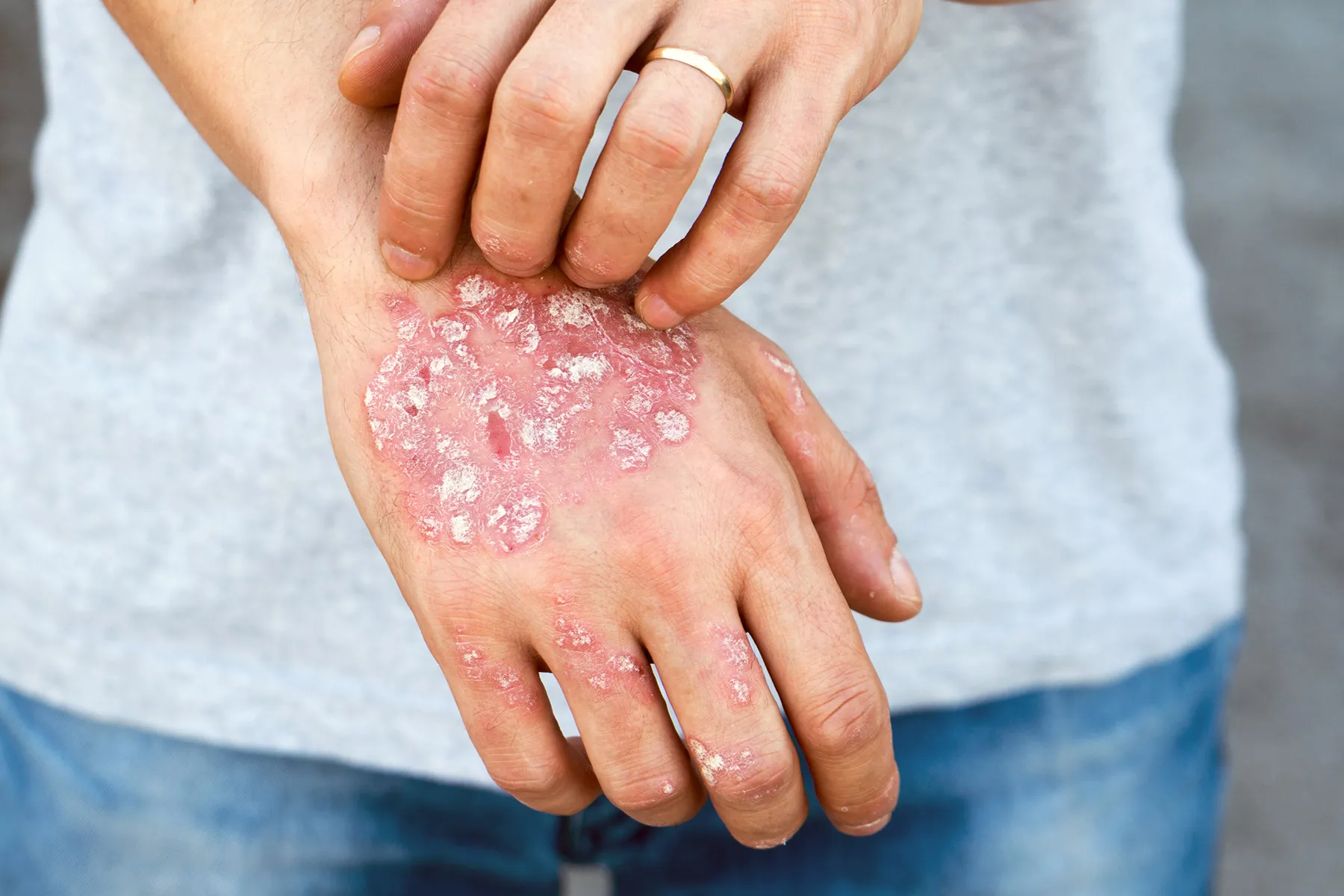
Psoriasis is a chronic autoimmune condition that affects how quickly skin cells are produced. In healthy skin, cells rise to the surface and shed over roughly a month. In psoriasis, this cycle speeds up dramatically, often compressing to just a few days. The skin can’t shed the excess cells fast enough, so they build up as raised, scaly patches known as plaques.
It’s a condition that affects a meaningful share of the population worldwide, yet it’s still frequently mistaken for a purely cosmetic issue or, worse, an infectious one. Neither is accurate. Psoriasis isn’t contagious, and while its visible symptoms matter to patients for very real reasons, the underlying cause is an immune system malfunction, not an external infection.
Why Psoriasis Happens
Psoriasis develops when the immune system’s T-cells, which normally defend the body against bacteria and viruses, mistakenly attack healthy skin cells instead. This triggers the rapid cell turnover responsible for plaque buildup.
Genetics play a substantial role. A family history of psoriasis meaningfully raises the likelihood of developing it, though having a genetic predisposition doesn’t guarantee the condition will appear. Environmental and lifestyle triggers often determine whether and when it does. Common triggers include:
- Physical stress or significant emotional stress
- Skin injury, including cuts, sunburn, or even tattoos (a trigger response known as the Koebner phenomenon)
- Certain infections, particularly streptococcal throat infections, which are strongly linked to a specific subtype in younger patients
- Cold, dry weather
- Certain medications, including some used for blood pressure and mood disorders
Alcohol and smoking don’t cause psoriasis outright, but both are well documented to make existing flares harder to control.
The Main Types of Psoriasis
Psoriasis isn’t a single uniform condition — it shows up differently depending on the type, and recognizing which pattern is present matters for choosing an appropriate approach. The types of psoriasis generally fall into a few recognized categories:
Plaque psoriasis is by far the most common form, accounting for the large majority of diagnosed cases. It presents as thick, well-defined, scaly patches, typically on the elbows, knees, scalp, and lower back.
Guttate psoriasis appears as small, drop-shaped spots rather than large plaques, often following a throat infection, and is seen more frequently in children and young adults.
Inverse psoriasis develops in skin folds — the armpits, groin, and underneath the breasts — and looks notably different from plaque psoriasis, presenting as smooth, shiny, reddened skin rather than scaly patches, because friction and moisture wear down the scale.
Pustular psoriasis is less common and more acute, marked by white, pus-filled bumps on inflamed skin, sometimes accompanied by fever. This type warrants prompt medical attention rather than a wait-and-see approach.
Because these types respond differently to treatment, an accurate diagnosis is the foundation of any effective plan, rather than an optional first step.
Approaches to Managing Psoriasis
There’s currently no cure for, and any claim otherwise deserves scrutiny. What a well-designed treatment plan can realistically do is reduce flare frequency, calm active symptoms, and extend the periods of clear or near-clear skin. Common approaches include:
Topical treatments, such as corticosteroid creams and vitamin D analogues, are typically the first line of defense for smaller, localized patches.
Phototherapy, particularly Narrowband UVB light exposure administered under clinical supervision, is a well-established option for more widespread plaque and guttate.
Systemic and biologic medications are used for moderate to severe cases that don’t respond adequately to topical or light-based treatment, working on the immune response at a broader level.
Ayurvedic and integrative protocols approach as a systemic condition rooted in digestion and immune imbalance rather than a purely surface-level issue, typically combining internal formulations with topical oils and lifestyle changes aimed at reducing trigger exposure over time.
For a meaningful share of patients, particularly those managing long-standing or recurrent, a combination of these approaches — rather than reliance on a single method — tends to produce more durable results. This is the reasoning behind most structured psoriasis treatment plans, which are typically built around the specific type, severity, and history of each case rather than a generic template.
Living With Psoriasis Day to Day
Beyond medical treatment, everyday management matters more than it’s often given credit for. Moisturizing consistently, avoiding known personal triggers, managing stress, and protecting skin from unnecessary injury all reduce the frequency and severity of flares. None of these replace medical treatment, but they meaningfully support it.
Psoriasis is a long-term condition, and the most realistic goal isn’t a permanent, one-time fix — it’s sustained, well-managed control that keeps flares infrequent and mild. Patients who work with a clinician to build a consistent, personalized plan and who stick with it through the slower early weeks before improvement becomes visible tend to see the best long-term results.